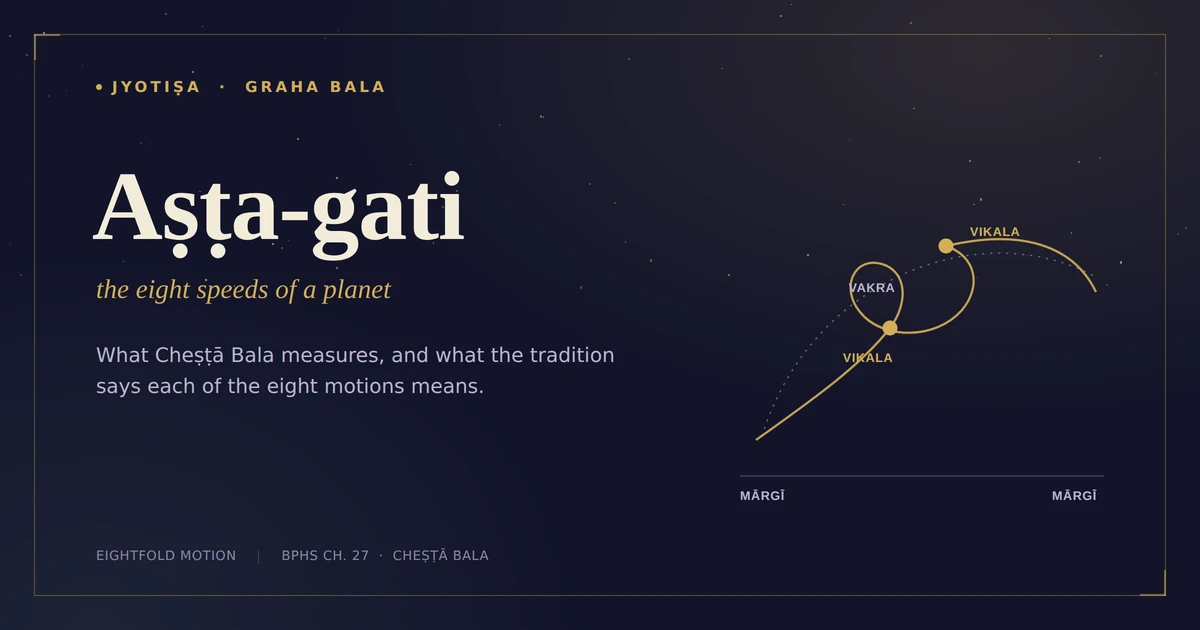
Aṣṭa-gati: The Eight Classical Speeds of a Planet, and the Cheshta Bala
Jyotisha grades every planet’s motion into eight named states — from full retrograde down to an unremarkable average pace — and turns that grade into Cheshta Bala, part of Shadbala. Here is what Brihat Parashara Hora Shastra says the eight states are worth, what Phaladeepika and Saravali say they mean, and how four contemporary teachers read them.
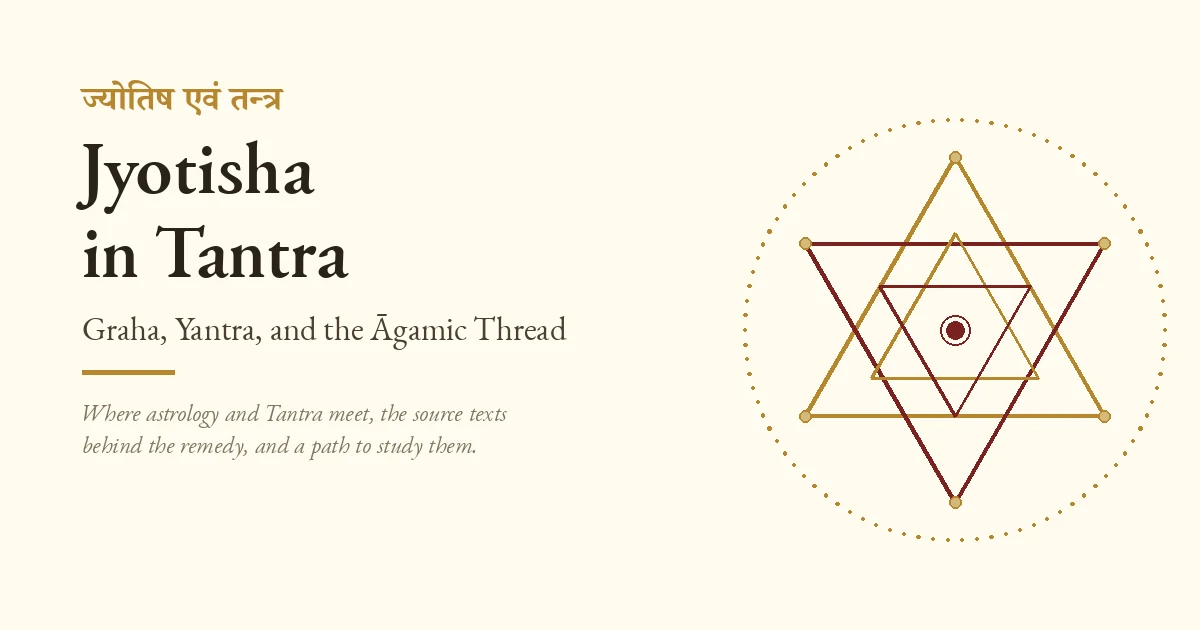
Jyotisha in Tantra: Where Astrology and Tantra Actually Meet
Introduction Ask most practising astrologers how Tantra fits into Jyotisha and you’ll get the same answer twice: remedies. A debilitated planet gets a yantra; an afflicted house gets a mantra; a persistent dosha gets a homa. That answer isn’t wrong, but it’s the surface of a much older and more interesting relationship — one where astrology and Tantra grew up side by side, kept borrowing each other’s technique, and at certain points share the same textual root.
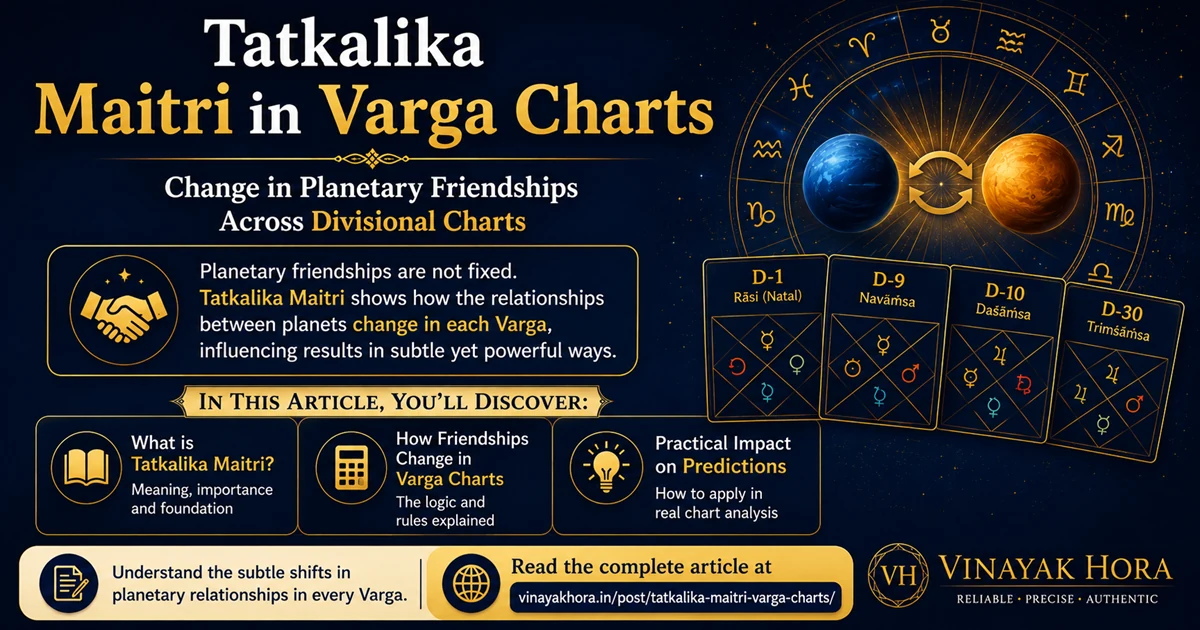
Temporary Planetary Relationships in Divisional Charts: From Rasi or from the Varga chart Itself?
A planet’s dignity in a divisional chart depends on its temporary friendships — but should those be measured in the Rasi chart or inside the varga? Ernst Wilhelm says the Rasi, always. Most modern software recomputes them per varga. We tested both against B.V. Raman’s published Saptavargaja Bala, and one of them matches all 49 cells.
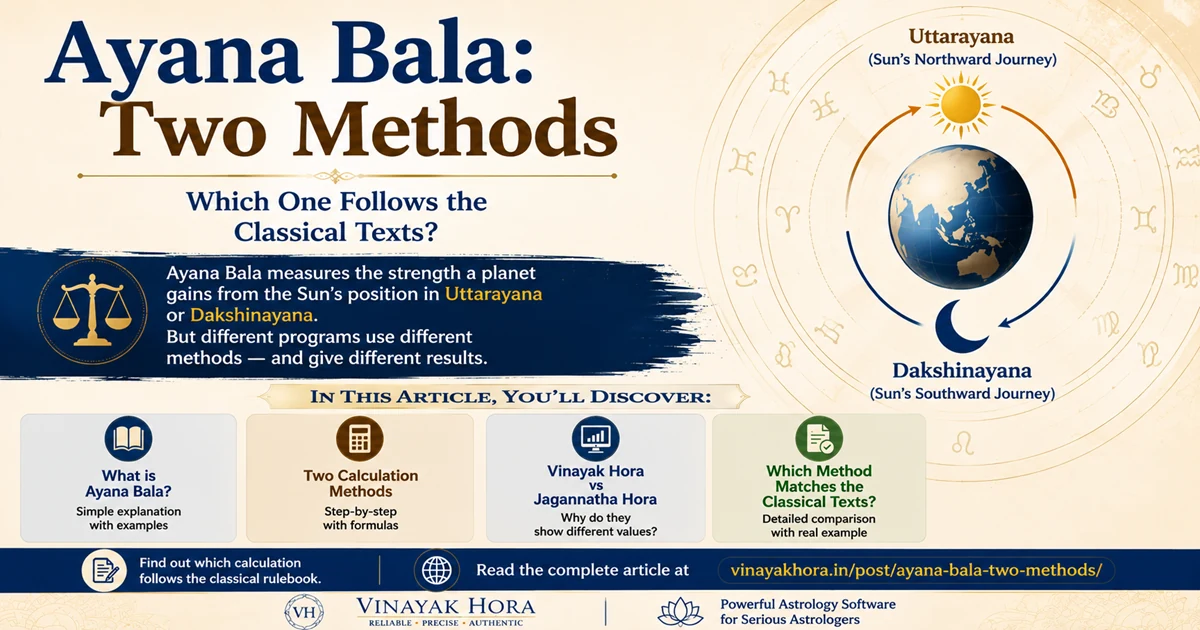
Ayana Bala: Two Ways to Measure the Same Thing (Classical Table vs Modern Trigonometry)
Ayana Bala measures a planet’s strength from its northern or southern course. There are two legitimate ways to compute it — the classical kranti table and modern trigonometry. Here is how each works, why the classical texts use 24 degrees, and how Vinayak Hora and Jagannatha Hora compare on a real chart.
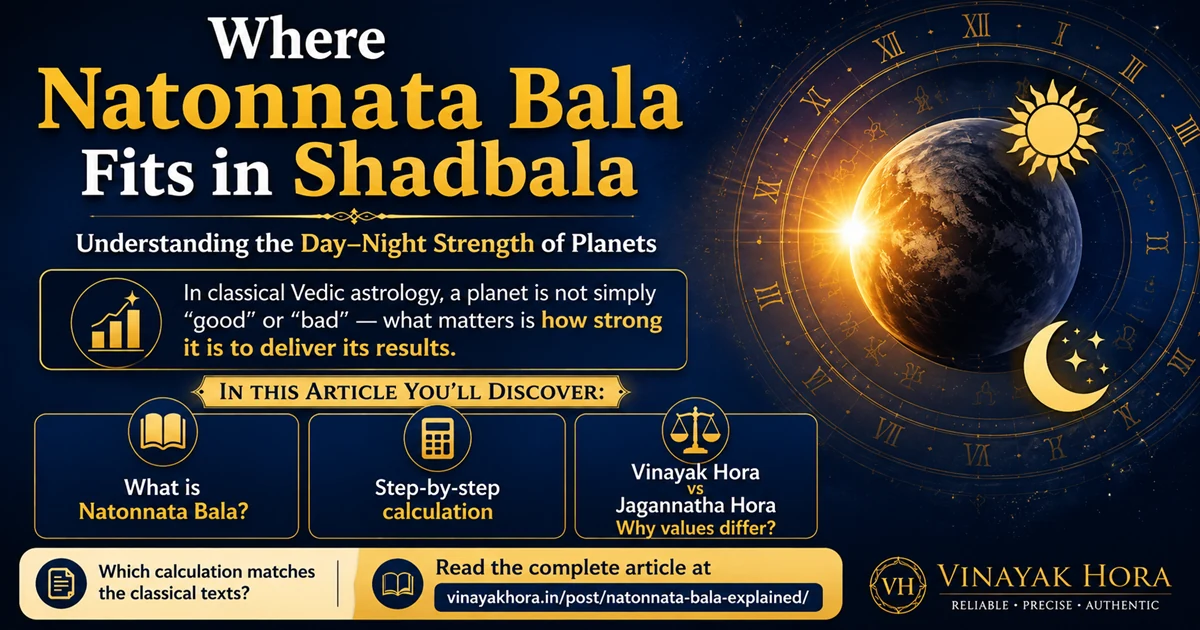
Natonnata Bala Made Simple: A Planet's Day–Night Strength (and Why Two Programs Disagree)
A plain-language guide to Natonnata Bala — the day/night strength in Shadbala — worked out step by step on a real example chart, and a look at why Vinayak Hora and Jagannatha Hora report different values.

A Journey Around the World!
On Mount Kailasa, the divine abode of Lord Shiva and Goddess Parvati, their two sons—Kartikeya and Ganesha—grew under the watchful presence of the gods.
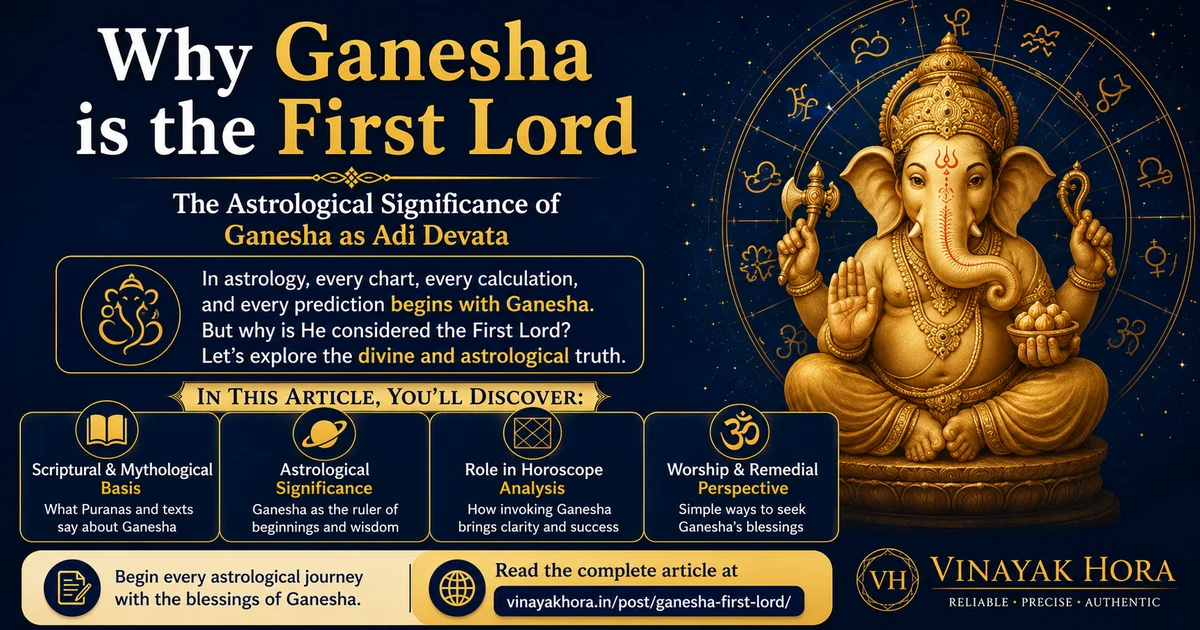
Why Lord Ganesha Is Worshipped First — A Vedic Perspective
Introduction From a strictly Vedic and classical textual perspective, the primacy of Lord Ganesha is not founded on later Puranic mythology, but on Vedic ritual logic, cosmology, and linguistic metaphysics. In the Vedas, the deity later identified as Ganesha appears as Ganapati / Brahmanaspati — the lord of sacred speech, ritual order, and cosmic organization.